
Key highlights
- Understand the core dedicated server vs VPS differences to make an informed choice based on performance, control, scalability and budget needs.
- Discover how VPS hosting provides a cost-effective and scalable solution for websites that require more resources than shared hosting but don’t necessitate a full server.
- Explore the unmatched performance and security benefits of dedicated servers, ideal for high-traffic sites, eCommerce and mission-critical applications.
- Know when to upgrade to virtual private server vs dedicated server by assessing real-world scenarios, traffic surges or developer staging environments.
Slow checkout speeds or frequent crashes could be costing you customers. If your eCommerce site is growing quickly, it’s time to consider a serious hosting upgrade.
The most popular upgrade options are Virtual Private Server (VPS) and dedicated server hosting, both of which offer significant performance improvements over shared hosting.
But which is better: VPS or dedicated server?
This post dives into the dedicated server vs VPS debate, offering an honest enterprise hosting comparison. We’ll help you understand which of VPS vs dedicated plan gives you the best mix of performance, security and control for your website.
We’ll also discuss the VPS vs dedicated pros and cons to help you keep your site running fast, secure and conversion ready.
Let’s start comparing VPS vs dedicated server hosting!
Quick difference between VPS and dedicated server: Comparison table
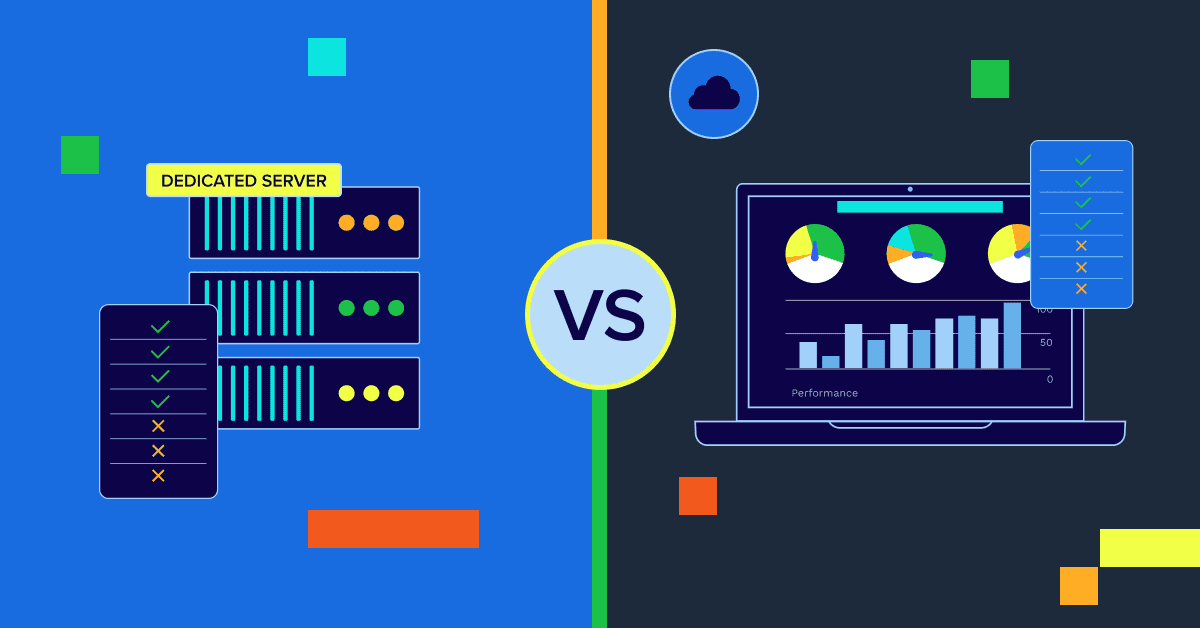
The main difference between VPS and dedicated server hosting is resource allocation. VPS shares a physical server with others but provides virtualized private resources. A dedicated server, on the other hand, gives you full control over an entire physical server.
Here’s a side-by-side VPS vs dedicated server hosting comparison to help you quickly understand the key differences:
| Feature | VPS hosting | Dedicated hosting |
| Resource allocation | Shared physical server, but dedicated virtual resources | Entire physical server dedicated to a single user |
| Performance | High, but may be affected if the host server is overloaded | Superior, with consistent speed and power |
| Security | Secure, but shares hardware with other users | Maximum security with complete isolation |
| Customization | Limited control over server settings | Full control over hardware, OS and configurations |
| Scalability | Easily scalable as business grows | Requires hardware upgrades or multiple servers |
| Cost | Mid-range pricing | Expensive, premium hosting |
| Best for | Small to medium-sized businesses, growing websites | High-traffic websites, enterprises, resource-intensive applications |
This quick table highlights the key differences between VPS hosting and dedicated hosting from performance to pricing. Ready to scale with confidence?
TL;DR – VPS vs dedicated server hosting in 2025
- Managed VPS hosting: Best for small–mid businesses, flexible scaling, starts at $46.99/mo.
- Self-managed VPS hosting: Best for developers or technical users, full root control & custom setups, starts at $4.99/mo.
- Dedicated hosting: For enterprises & secure eCommerce, starts at $141.19/mo.
- Bottom line: VPS gives room to grow; dedicated offers top-tier control and performance.
Note: Starting prices are based on current 36-month term rates and may change.
Now, let’s dive deeper into how each hosting type works and what sets them apart.
Dedicated server vs. VPS: An overview
Both options help solve shared hosting problems. Many websites compete for unevenly distributed server resources, which is a common reason for slow page load times. And sometimes, shared server overload can result in downtime.
However, VPS and dedicated servers offer different ways to combat the limitations of shared hosting. Ultimately, the hosting plan you choose will depend on your needs and budget.
Here’s a rundown comparing VPS vs dedicated server hosting to get you up to speed.
What is VPS hosting?
A VPS (Virtual Private Server) is a hosting environment that mimics a dedicated server within a shared physical server. It utilizes virtualization technology to create isolated virtual machines with dedicated resources, such as CPU, RAM and storage.
VPS hosting offers more control, performance and scalability than shared hosting. It’s ideal for growing websites, developers and small businesses.
The primary difference between shared hosting and VPS hosting lies in server allocation. With shared hosting, you typically don’t have access to fixed server resources beyond server space. This means that if one website on your shared server experiences a traffic spike, its performance may take a hit.
But with VPS hosting, you don’t have to worry about how many resources other websites are using because it won’t affect your website’s speed. A VPS gives you dedicated space on a large physical server that other websites on the same server can’t access.
To protect your resources, we separate server resources using a process called virtualization. This process divides a physical server into multiple virtual machines, which are created and managed by a hypervisor program.
This way, each user has a personal virtual machine with isolated resources (for example, CPU power, RAM and bandwidth).
Common VPS hosting use cases and applications
VPS hosting is highly versatile, making it a popular choice for various applications beyond basic website hosting. Small businesses and agencies often use a VPS to manage multiple client websites from a single, isolated environment. For developers, the root access is invaluable for creating custom development and staging environments to test applications without affecting a live site.
A VPS also has the power to run resource-intensive applications, such as a growing eCommerce store that needs more power than shared hosting can provide, or even hosting private gaming servers. Its scalability makes it the ideal upgrade for bloggers experiencing traffic surges or businesses running custom software that requires specific server configurations.
What is dedicated server hosting?
A dedicated server is a type of web hosting where an entire physical server is exclusively allocated to one user or business. It offers full control over server resources, maximum performance and enhanced security.
Dedicated hosting is ideal for high-traffic websites, large applications and businesses that need custom configurations and complete isolation from other users.
With a dedicated hosting account, you get AMD EPYC chips with superior processing power and ultra-fast NVMe SSD storage drives, ensuring superior speed and reliability. Additionally, you have full control of your server with root access. So, you can serve web content quickly.
Our Standard NVMe 32 plan offers 8 CPU cores, 32 GB of DDR5 RAM and up to 1000 GB of NVMe storage. This is enough for even the most demanding websites.
Common dedicated hosting use cases and applications
Dedicated servers prove essential for high-traffic websites, enterprise applications, gaming servers and resource-intensive workloads requiring maximum performance and absolute control. When evaluating vps vs dedicated server options in 2025, dedicated hosting delivers fully exclusive resources, meaning no resource contention with other users along with complete customization capabilities and superior reliability that mission-critical applications demand.
This hosting solution ensures consistent uptime exceeding 99.9%, robust processing power for handling traffic spikes and data-intensive operations and enhanced security through complete isolation from other environments. This makes it the optimal choice for businesses needing predictable performance without compromise.
Dedicated server vs. VPS: How do they work?
When choosing between VPS vs dedicated server hosting, understanding how each works is crucial. Both hosting types provide better performance and reliability compared to shared hosting. Here’s how VPS hosting vs dedicated hosting serve different needs.
How does VPS hosting work?
VPS hosting operates by partitioning a physical server into multiple isolated virtual servers using a technology called virtualization.
Each VPS functions as an independent server with dedicated CPU power, RAM, storage and bandwidth. So, your website’s performance is not affected by other websites on the same physical server.
A hypervisor (a software layer) manages these virtual servers and ensures they operate separately, preventing resource conflicts.
Unlike shared hosting, where multiple websites compete for the same resources, VPS hosting guarantees a fixed allocation of resources. This improves speed and reliability.
VPS hosting is an excellent choice for businesses that require better performance than shared hosting but don’t need the full power of a dedicated server. It also allows for scalability, meaning you can easily upgrade your resources as your website grows.
How does dedicated hosting work?
Dedicated hosting provides an entire physical server exclusively for one client. So, you have the highest level of performance, security and customization. Unlike VPS hosting, where a physical server is divided into multiple virtual machines, a dedicated server gives your own dedicated resources. So, you can control CPU, RAM, storage and bandwidth.
Because of no resource sharing, dedicated hosting also ensures consistent high-speed performance and maximum uptime. So, it’s ideal for large-scale websites, high-traffic applications and businesses that handle sensitive data.
With dedicated hosting, you can customize your own server environment to suit your needs. Also, you can choose the operating system, install custom software, configure security settings and optimize performance based on your specific requirements.
However, managing a dedicated server requires technical expertise or a dedicated IT team. You’ll need to handle tasks such as server configuration, security updates and performance optimization.
Understanding managed vs unmanaged VPS and dedicated hosting
When choosing a VPS or dedicated server, you’ll encounter two management options: managed and unmanaged. Here’s the key difference between managed vs unmanaged hosting:
| Aspect | Managed hosting | Unmanaged hosting |
|---|---|---|
| Technical skill | Minimal required | Expert server admin skills needed |
| Time investment | Low; provider handles tasks | High; you manage everything |
| Security & updates | Handled by the host | Your responsibility |
| Best for | Business owners, beginners | Developers, IT professionals |
With managed hosting, the provider handles all technical server administration, including security patches, software updates, monitoring, and backups. This is ideal for beginners, small businesses, or anyone who wants to focus on their website without worrying about server maintenance. In contrast, unmanaged hosting gives you full root access and control, but you are responsible for all server management tasks.
Simplifies this choice by offering managed hosting for both VPS and dedicated plans, ensuring your server is secure, optimized, and supported by our expert team 24/7. This approach saves you time and reduces the technical burden. Experienced developers and IT teams might prefer the complete control of an unmanaged environment, but for most users, a managed solution provides the perfect balance of power and convenience.
Dedicated server vs. VPS: Scaling & performance
When it comes to scalability and performance, here are the distinct advantages of VPS vs dedicated server hosting.
VPS hosting
VPS is highly scalable, meaning you can upgrade your resources (CPU, RAM, storage) as your website grows. Since it’s hosted on a shared physical server, you can scale up your plan without migrating to a new server.
But VPS performance depends on the allocated resources and extreme traffic spikes may still cause slowdowns.
Dedicated hosting
Dedicated servers, on the other hand, deliver unmatched performance because all server resources are exclusively yours. This makes them ideal for high-traffic websites, resource-intensive applications and enterprises that need consistent speed and reliability.
However, unlike VPS and cloud hosting, dedicated servers don’t support instant resource scaling. Scaling a dedicated server requires manual hardware upgrades, which can be time-consuming and costly.
Verdict: If your website needs steady, long-term performance with dedicated resources, a dedicated server is the best choice. If you prefer a more flexible, budget-friendly approach that allows you to scale gradually, VPS hosting is a great option.
Ready to scale?
VPS vs Dedicated hosting: Security comparison
Security is a crucial factor when choosing between VPS vs dedicated server hosting, particularly for websites that handle sensitive data. Here’s the difference between VPS and dedicated server in terms of security breaches.
VPS hosting
VPS offers better security than shared hosting because each virtual server is isolated from others on the same physical machine. However, VPS hypervisors can be a potential attack surface, and weak configurations may expose virtual machines to security threats.
Mitigates these risks with advanced DDoS protection, firewalls, regular security patches and isolated resource environments for every VPS user.
A well-secured VPS with firewalls, DDoS protection and regular security updates can provide a high level of protection.
Dedicated hosting
A dedicated server provides maximum security because you are the sole user of the entire server. This means no risk of cross-site contamination or shared security threats. Dedicated hosting is ideal for websites that handle customer transactions, financial data, healthcare records or other confidential information.
Additionally, you have full control over implementing custom security measures, encryption and advanced firewalls tailored to your needs.
Dedicated hosting includes Premium WAF, malware scanning, DDoS >2Tbps and 2FA. This ensures data integrity and protection.
Verdict:If security is your top priority, especially for compliance-heavy industries like eCommerce, dedicated hosting is the safest choice. However, a well-managed VPS hosting with strong security protocols can still be a reliable option for growing businesses.
Dedicated server vs. VPS: Cost comparison
Cost is a significant factor in deciding between VPS and dedicated hosting accounts. Both options are available at different price points, depending on their resource allocation.
Here’s a high-level view of how VPS vs dedicated hosting plans compare in cost and value:
| Criteria | VPS hosting | Dedicated hosting |
|---|---|---|
| Typical starting price | $20–$100/month | $80–$300/month |
| Best for | Small businesses, blogs, startups | Large sites, high-traffic applications |
| Why | Budget-friendly, scales easily, offers dedicated server resources | Exclusive server resources, top performance, enhanced security |
Note:VPS and dedicated hosting prices may vary depending on the hosting provider, features offered and level of server management.
Now that you’ve seen the cost differences, let’s dive back into the difference between VPS and dedicated server and how they fit your specific needs.
VPS hosting
VPS is a cost-effective upgrade from shared hosting, offering dedicated resources at a fraction of the price of a dedicated server. Since multiple users share a physical server, the costs are lower.
This makes VPS ideal for smaller websites, medium-sized businesses and startups that need better performance without a hefty investment.
Dedicated hosting
Dedicated servers are more expensive because you rent an entire physical server exclusively for your use. This means premium performance, security and customization, but also higher operational costs.
Dedicated hosting is best suited for high-traffic websites, enterprises and resource-intensive applications. They require full server control and maximum uptime.
Verdict:If you’re looking for cost-effective scalability, VPS hosting is the better choice. However, if your business requires uncompromised performance and security, a dedicated server is worth the investment.
Dedicated server vs. VPS: Uptime and availability
Website uptime is crucial for maintaining reliability, user experience and search engine rankings. Both VPS and dedicated hosting offer better uptime than shared hosting. Here’s how VPS vs dedicated hosting differ in consistency and redundancy.
VPS hosting
VPS provides high uptime as long as the hosting provider maintains the physical server well. However, since multiple virtual servers share the same hardware, any hardware failure or resource contention can impact the availability of all virtual servers.
Many VPS hosting providers offer uptime guarantees of 99.9% or higher. However, performance may still fluctuate if the host system experiences issues.
Dedicated hosting
Dedicated servers offer the highest level of uptime and availability because you don’t share resources with other users. This ensures consistent performance, faster load times and reduced downtime risks.
Additionally, dedicated hosting often includes redundant power supplies, Cloudflare Enterprise CDN and failover solutions to enhance stability.
Verdict: If your website relies on consistent uptime and availability, dedicated hosting is the most reliable choice. VPS hosting remains a solid option for businesses seeking high availability on a budget. However, it may have slight performance fluctuations in extreme scenarios.
Tools like UptimeRobot and ManageWP help track uptime consistency.
Dedicated server vs. VPS: Email hosting capabilities
Both VPS and dedicated servers support email hosting, but they differ in terms of control, reliability and deliverability. Here’s how VPS vs dedicated server hosting manages business email functionality.
VPS hosting
A Virtual Private Server (VPS) allows you to host your own email accounts with more control than shared hosting. A VPS solution provides dedicated resources on a shared physical server, enabling custom mail server setups, spam filters and encryption.
However, since you’re still on the same physical server as other users, a poor IP reputation from neighboring servers may affect deliverability.
Some hosting providers offer managed VPS hosting to simplify setup and improve security. It’s a cost-effective solution for small businesses seeking better email privacy and scalability.
Dedicated hosting
Dedicated hosting offers maximum control over email services with no shared server resources. Your entire physical server is isolated for better performance, security and consistent email deliverability.
You can set up unlimited email accounts, enable SSL encryption and configure SPF, DKIM and DMARC records. Since you’re the only one using the IP address, there’s no risk of blacklisting due to other users.
For large businesses or those handling sensitive customer data, dedicated server hosting is the most secure web hosting solution for email.
Verdict: Choose VPS hosting if you need flexible email control with some setup effort. For full control, security and reliability, go with dedicated hosting.
Dedicated server vs. VPS: Developer tools and features
VPS and dedicated servers both support developer-friendly environments. But they differ in flexibility, access and control over server configurations and resources. Here’s what virtual private server vs dedicated server provides in developer tools.
VPS hosting
A virtual private server provides root access. So, developers can install custom software, configure server environments and test applications. VPS hosting offers a balanced mix of control and affordability, ideal for staging environments or small-scale dev projects.
You can access SSH, set up multiple sites and choose your OS in most plans. However, server resources are still shared on the same physical server, which may limit performance during testing.
VPS hosting is a great entry point for developers who need flexibility without managing physical hardware. With VPS, you get access to a user-friendly control panel, easy server management tools and 24/7 support to simplify technical maintenance.
Dedicated hosting
Dedicated hosting gives full root access to the entire physical server, making it perfect for advanced customizations. Developers can build complex environments, deploy high-performance apps and configure every aspect of the server.
With dedicated server hosting, you have complete control over CPU, RAM, storage and security layers. You can even create virtual machines or containers, making it ideal for testing advanced configurations.
Dedicated hosting includes WHM + cPanel or root-level SSH, staging & multi-server environments and Git/Composer/Terminal tooling.
Whether you’re staging a small app or managing a complex infrastructure, the right hosting plan depends on how much control and power your development workflow demands.
Here’s a side-by-side comparison of VPS vs dedicated server hosting to help you choose the best fit for your development needs:
| Feature / capability | VPS hosting | Dedicated hosting |
| Root access | Yes, full root access on a virtual environment | Yes, complete root access to the entire physical server |
| Custom software installation | Supported, great for small-scale apps and staging | Fully supported, ideal for high-performance and enterprise-grade apps |
| Server control | Moderate; limited by shared physical server | Full; control over CPU, RAM, storage and network |
| Performance consistency | May vary; shared resources can affect speed | Consistent; resources are exclusive to one user |
| Testing environments | Good for basic development, staging and small test cases | Suitable for sandboxing, virtual machines and large-scale development |
| Operating system choice | Yes, most VPS plans allow OS selection | Yes, full flexibility to install any OS or run multiple environments |
| Best for | Developers needing flexibility and affordability without physical server management | Advanced developers or teams building complex, resource-heavy or production-ready applications |
Verdict: VPS hosting is great for developers who want control over a budget. Dedicated hosting offers deeper access to complex, high-performance development needs. Developers can also benchmark performance using GTmetrix, Google PageSpeed Insights or Pingdom.
Comparing VPS vs Dedicated server hosting plans
Offers three powerful hosting environments Managed VPS, Self-Managed VPS and Dedicated hosting plans designed to meet different performance, control and scalability needs. Here’s how VPS vs dedicated server hosting compare side by side.
| Feature | Managed VPS hosting | Self-managed VPS hosting | Dedicated hosting |
|---|---|---|---|
| CPU Cores | 2 – 8 vCPU cores | 1 – 16 vCPU cores (developer-grade) | 8 – 32 CPU cores |
| RAM (DDR5) | 4 GB – 16 GB | 2 GB – 64 GB (tier-based) | 32 GB – 128 GB |
| Storage (NVMe SSD) | 100 GB – 450 GB | 50 GB – 450 GB | 1000 GB – 3000 GB |
| Bandwidth | Unmetered | Unmetered | Unmetered |
| Dedicated IPs | 2 | 1–2 (based on plan) | 3 |
| Site Migration | Free Site Migration Tool | Free Site Migration Tool | Free Site Migration Tool |
| Money-back Guarantee | 30-day | 30-day | 30-day |
| Custom Option | 1:1 guidance, service walkthrough, setup support | Root-level freedom, OS customization, dev-stack control | 1:1 guidance, enterprise support |
Managed VPS hosting
VPS hosting is ideal for growing businesses that want more power than shared hosting. We offer impressive raw compute power, full root access and fully dedicated server resources that empowers developers, designers and system administrators to build without limits.
VPS hosting plans come in three tiers:
- Standard NVMe 4: 2 vCPU cores, 4 GB DDR5 RAM, 100 GB NVMe storage, Unmetered bandwidth
- Enhanced NVMe 8: 4 vCPU cores, 8 GB DDR5 RAM, 200 GB NVMe storage, Unmetered bandwidth
- Ultimate NVMe 16: 8 vCPU cores, 16 GB DDR5 RAM, 450 GB NVMe storage, Unmetered bandwidth
Each of our VPS hosting plan includes root access, HTTP/2 enabled servers, SSH and SFTP access and 24/7 support.
Self-managed VPS hosting
Self-Managed VPS hosting is designed for developers and advanced users who want complete control over their server environment. You get full root access with the flexibility to configure your own OS, install custom packages and optimize your server to match your application’s exact requirements.
Self-Managed VPS hosting plans also come in multiple NVMe tiers, offering a scalable foundation for development, testing and production workloads:
- NVMe 2: 1 vCPU core, 2 GB DDR5 RAM, 50 GB NVMe storage, unmetered bandwidth
- NVMe 4: 2 vCPU cores, 4 GB DDR5 RAM, 100 GB NVMe storage, unmetered bandwidth
- NVMe 8: 4 vCPU cores, 8 GB DDR5 RAM, 200 GB NVMe storage, unmetered bandwidth
- NVMe 16: 8+ vCPU cores, up to 64 GB RAM (higher developer tiers available), unmetered bandwidth
Each Self-Managed VPS plan includes full root access, dedicated IP, SSH/SFTP access and instant provisioning. You manage your OS updates, stack configuration and security hardening. It’s ideal for users who prefer full technical freedom without the limitations of shared or managed environments.
Dedicated hosting
Dedicated hosting plans provide unmatched performance with full access to an entire physical server. It’s a robust web hosting solution for high-traffic sites, data-heavy applications and businesses needing maximum uptime, control and compliance.
Dedicated hosting options offer complete control and top-tier performance:
- Standard NVMe 32: 8 CPU cores, 32 GB DDR5 RAM, 1000 GB NVMe storage, Unmetered bandwidth
- Enhanced NVMe 64: 16 CPU cores, 64 GB DDR5 RAM, 2000 GB NVMe storage, Unmetered bandwidth
- Premium NVMe 128: 32 CPU cores, 128 GB DDR5 RAM, 3000 GB NVMe storage, Unmetered bandwidth
All our Dedicated hosting plans feature RAID1 storage, premium WAF and optional full root access.
Now, let’s look at the pros and cons of dedicated server vs VPS hosting.
Pros and cons – VPS hosting
While VPS hosting outperforms shared hosting, it may not meet the specific needs of some websites. Here’s how VPS hosting measures up against other web hosting plans.
Pros of VPS hosting
- More cost-efficient than dedicated hosting
- Offers dedicated server resources on a shared physical server
- Easy to scale up as your traffic grows
- Root access and flexible server configurations
- Ideal for small businesses, developers and testing environments
Cons of VPS hosting
- Limited control compared to a dedicated server
- Performance can be affected by other users on the same physical machine
- Security risks are higher than with dedicated hosting
- May require some technical expertise or a managed VPS plan
Pros and cons – Dedicated hosting
Fully dedicated servers are great for high-growth enterprises, but they won’t be the best option for every business. Here are a few benefits of choosing dedicated server hosting over shared hosting and some drawbacks to consider.
Pros of dedicated hosting
- Complete access to all server resources
- Highest level of performance, uptime and reliability
- Enhanced security and privacy; no other users on the physical server
- Fully customizable environment: OS, firewall, storage, apps
- Ideal for large-scale websites, eCommerce and data-sensitive operations
Cons of dedicated hosting
- Higher cost than VPS hosting or shared hosting
- Requires advanced technical skills or managed support
- Manual scaling needed; may involve hardware upgrades
- Overkill for low-traffic or simpler websites
Dedicated server vs VPS hosting trends to consider in 2025
As the hosting landscape evolves in 2025, the choice between VPS vs dedicated server hosting should be strategic. Here’s what’s shaping the market:
1. A dedicated comeback grounded in demand and compliance
Dedicated servers are surging back. A recent survey found that 86% of organizations still rely on dedicated servers, and 42% migrated workloads off the public cloud in the past year. This was to meet compliance and performance needs across government, finance, IT and AI-based applications.
2. VPS adapting to your budget and traffic
VPS hosting is reshaping pricing models to match modern needs. Expect flexible usage-based billing, hourly or burstable pricing and modular add-ons. For example, extra CPU or RAM when needed is a boon for startups, SaaS platforms and development projects looking to scale smartly.
3. Rapid growth, rapid shifts
The hosting market is booming. The VPS segment is projected to reach $8.3 billion by 2026, while dedicated hosting is set to hit $29.6 billion. These are fueled by increasing demand for security, performance and control.
4. Hybrid & multi-use strategies on the upswing
Neither hosting format stands alone anymore. Organizations increasingly adopt hybrid models, leveraging VPS for flexibility and dedicated servers for compliance-critical or compute-heavy workloads. This approach reflects real-world infrastructure evolution rather than theoretical choices.
In 2025, your choice between VPS hosting vs dedicated hosting should align with evolving needs. While VPS shines with flexible scaling and new pricing innovations, dedicated servers remain indispensable for high-performance, compliance-sensitive and AI-focused workloads. A hybrid strategy may well deliver the best of both worlds.
Key factors to consider when choosing VPS vs dedicated hosting
Choosing between VPS vs dedicated hosting is a strategic decision that hinges on your specific business and technical requirements. Making the right choice ensures you have the performance, security and scalability needed for future growth without overspending. Use this framework to evaluate which option best aligns with your goals.
1. Traffic and performance demands
Evaluate your current and projected website traffic. A VPS is perfect for websites outgrowing shared hosting, effectively managing moderate to high traffic and occasional spikes. However, for mission-critical applications, large eCommerce stores, or sites with consistently heavy traffic, the guaranteed, uncontended resources of a dedicated server are essential for maintaining fast load times and a smooth user experience.
2. Budget and total cost of ownership (TCO)
VPS hosting provides a powerful, isolated environment at a significantly lower price point than a dedicated server, making it a cost-effective solution for many businesses. A dedicated server has a higher TCO but delivers unparalleled performance and reliability. For businesses where even minimal downtime translates to substantial revenue loss, the investment in a dedicated server is easily justified.
3. Scalability and business growth
Your growth trajectory is a key factor. VPS hosting is inherently more flexible for scaling; Allows you to easily upgrade your CPU, RAM, and storage as your needs evolve. Scaling a dedicated server is a more significant step, often requiring a migration to a more powerful machine. If you anticipate rapid or unpredictable growth, a VPS offers a more agile path. If your growth is predictable and requires massive, sustained resources, a dedicated server is the more stable long-term solution.
4. Security and compliance needs
While VPS environments are securely isolated from one another, they still share a physical server. For businesses handling sensitive financial information, health records, or other confidential data, a dedicated server provides the ultimate in security and privacy. The complete physical isolation helps meet strict regulatory compliance standards like PCI DSS or HIPAA.
5. Technical expertise and control
Both hosting types offer root access for full administrative control. However, a dedicated server gives you complete authority over every aspect of the machine, including hardware and network configurations, which requires significant technical expertise to manage. A VPS provides a similar level of software control within a pre-configured virtual environment, making it more manageable for smaller teams.
Real-world use case scenarios
Not sure which hosting plan fits your needs? Here are three real-life scenarios to help you decide between VPS vs dedicated hosting.
1. Medium traffic blog scaling with VPS
A growing blog may outgrow shared hosting limits but doesn’t yet need an entire server. A virtual private server offers better performance, more server resources and greater stability.
With VPS hosting, bloggers can manage traffic spikes, optimize load times and scale gradually. It’s a smart upgrade for content creators who want reliability without high costs.
2. eCommerce store needing dedicated security
Online stores that handle sensitive customer data should prioritize security and performance. Dedicated hosting provides an isolated environment, so no other users share your physical server.
This reduces the risk of data breaches, boosts trust and ensures consistent uptime during peak shopping seasons. A dedicated server is ideal for stores needing PCI compliance, fast checkouts and uninterrupted service.
3. Developer needing staging environments
Developers often need dedicated environments to test updates before going live. VPS hosting offers a secure web hosting space to create multiple staging environments using root access and custom tools.
It supports version control, OS selection and application testing without impacting the live site. This makes VPS the go-to choice for dev teams managing multiple projects.
Tip: If your use case overlaps between scenarios, choose VPS hosting to get started. You can choose dedicated hosting later when your traffic or security demands grow.
Is VPS or dedicated hosting better for your business needs?
Choosing between a VPS and a dedicated server isn’t about which is universally “better,” but which is right for your business’s specific stage and needs. The optimal choice depends on your traffic, budget, security requirements, and growth plans. This guide breaks down the decision for different business types.
1. Startups and small businesses
For businesses graduating from shared hosting, a VPS is the logical next step. It provides a significant performance and security boost without the high cost of a dedicated server. A VPS offers the perfect balance of affordability and scalable resources to handle moderate traffic, making it ideal for companies focused on growth while managing a tight budget.
2. Growing mid-sized companies
As traffic and resource demands increase, a high-tier VPS plan often meets scaling needs effectively. However, if your website runs resource-heavy applications or experiences consistent high traffic, an entry-level dedicated server becomes a smart investment. It eliminates any risk of “noisy neighbors” and guarantees performance, providing a stable foundation for continued growth.
3. Enterprises and eCommerce stores
For large organizations and serious eCommerce businesses, dedicated hosting is essential. The complete server isolation is critical for meeting strict security and compliance standards like PCI or HIPAA. Dedicated servers provide the raw power needed to handle thousands of simultaneous transactions and high-volume traffic, ensuring maximum uptime and protecting sensitive customer data, which is non-negotiable for these business types.
When to choose a dedicated server vs VPS hosting?
Choosing between VPS vs dedicated hosting depends on your website’s needs, budget and growth expectations. Here’s when virtual private server vs dedicated server makes the most sense:
Choose VPS hosting if
- You need better performance than shared hosting, but don’t require an entire server.
- Your website is growing, and you want a budget-friendly way to scale it up.
- You run a small to medium-sized business or a high-traffic blog.
- You don’t have advanced technical expertise and prefer a managed hosting plan.
- Your budget is limited, and you want cost-effective dedicated resources.
Choose dedicated hosting if
- Your website receives high traffic or runs resource-intensive applications (for example, large eCommerce stores, SaaS platforms, gaming servers).
- Security is a top priority, especially for sites handling sensitive user data (finance, healthcare, etc.).
- You require maximum performance and server reliability for uninterrupted operations.
- You need full control over hardware configurations and customization.
- Your business is established and has a budget for premium hosting.
Tip: Confused between dedicated server vs VPS? Choose VPS hosting to get started. It’s scalable and gives you time to grow before committing to a dedicated server.
Decision matrix: VPS vs. dedicated server
Use this table to quickly assess the difference between VPS and dedicated server hosting based on your primary needs.
| Factor | Choose VPS hosting if… | Choose Dedicated hosting if… |
| Performance | You have moderate to high traffic with occasional spikes. | You run resource-intensive applications or have consistently high traffic. |
| Budget | You need a cost-effective solution with a lower TCO. | Maximum performance and uptime justify a premium investment. |
| Scalability | You require the flexibility to scale resources up or down easily. | Your resource needs are predictable and consistently high. |
| Security | You need strong security and isolation beyond shared hosting. | You must meet strict compliance standards (PCI, HIPAA) or handle sensitive data. |
| Control | You want root access and software customization without managing hardware. | You require complete control over the entire hardware and software stack. |
How to make the VPS vs dedicated server decision?
Still wondering, should you upgrade to VPS or dedicated server? Here are seven key factors to consider when deciding between virtual private server vs dedicated server:
- How important is website speed to you?
- What is your budget?
- How much traffic does your website get?
- What type of website do you operate?
- What is your technical skill level?
- Do you need full server control?
- Are you planning to scale?
Let’s look at each of the deciding factors of VPS hosting vs dedicated hosting in more detail:
How important is website speed to you?
Speed may not be a top priority for a one-page informational website that only provides your business’s contact information. But if your business transactions depend on quick loading times, a dedicated server can pay for itself.
For example, if you run an eCommerce store, a dedicated server can give your customers a smooth path to the checkout page and increase brand loyalty.
What is your budget?
If your online business is seeing an uptick in traffic but overall volumes are still modest, your budget may not stretch to dedicated hosting. In this case, a VPS might be your best choice until your profit margins increase.
How much traffic does your website get?
A dedicated server plan isn’t the best option if your website has moderate traffic or only sees seasonal visitor spikes. Take a realistic look at your web traffic data to ensure you get what you need, plus some room to scale.
What type of website do you operate?
If your website has various complex applications, you can benefit from the dedicated resources of a dedicated server. Also, if your website handles sensitive customer data, it makes more sense to get a dedicated server from the get-go. It’ll safeguard this sensitive information against potential security threats.
What is your technical skill level?
Configuring a VPS or dedicated server is no walk in the park. To reap the benefits of these web hosting types, you’ll need a great deal of technical know-how. Or you can hire a trusted IT team to set up and monitor your web server environment.
Do you need full server control?
If you want to configure your own security rules, install custom software or change server settings, control is key.
Dedicated hosting is often referred to as full control hosting. This is because you can manage every aspect of the physical server, from operating system to firewalls and application stacks. It’s ideal for advanced configurations and full-stack deployments. VPS hosting offers root access too, but with some limitations tied to the shared physical infrastructure.
Choose based on how much access and autonomy your hosting environment demands.
Are you planning to scale?
If your site is growing steadily or has unpredictable spikes, scalability should guide your decision.
VPS hosting makes it easy to scale CPU, RAM or storage without migrating to a new server. Dedicated server upgrades often require manual hardware changes or server clustering, which can be costly and complex.
If flexibility and faster growth adaptation are priorities, a virtual private server is a smart place to start.
Audience-based hosting recommendations – VPS vs dedicated server hosting
Still not sure which hosting type is right for you? Use this quick VPS hosting vs dedicated hosting table to match your website type with the best hosting fit.
| Criteria | Beginner blogger | eCommerce site | Agency | Developer |
|---|---|---|---|---|
| Traffic level | Low | High | Medium–high | Medium |
| Recommended hosting | VPS | Dedicated | VPS or dedicated server | VPS |
| Why | Cost-effective and easy to scale | Better control and stronger security | Depends on client volume and projects | Great for sandboxing and flexibility |
Tip: If you’re unsure, start with VPS hosting. It’s scalable and gives you time to grow before committing to a dedicated server.
Alternatives to VPS or dedicated server hosting
VPS and dedicated servers deliver high performance and control, but they aren’t the only options. Offers several alternatives that may be a better fit depending on your website’s size, goals and budget:
1. Shared hosting
Shared hosting is the most beginner-friendly option. Your site shares server resources with others, keeping costs low and setup simple. Shared hosting is perfect for personal websites, blogs or small businesses just starting online.
2. Managed WordPress hosting
For WordPress users, Managed WordPress hosting is optimized for speed, security and reliability. With managed WordPress updates, global data centers, enterprise-grade security and expert WordPress support, our plans make managing your site straightforward and stress-free.
3. WordPress Cloud hosting
WordPress Cloud hosting takes WordPress performance a step further. By distributing your site across multiple servers, our service delivers faster load times, built-in scalability and uptime protection. WordPress Cloud hosting is a smart choice for sites expecting variable traffic or rapid growth.
4. WooCommerce hosting
If you’re building an online store, WooCommerce hosting provides everything you need. From WooCommerce auto-install to secure payment processing and eCommerce-specific tools, our plans are tailored to help your store run smoothly and scale confidently.
Verdict: If VPS or dedicated hosting feels like more than you need, you can consider shared hosting, WordPress hosting, WordPress Cloud hosting and WooCommerce hosting. They give you reliable, scalable ways to get your site online without overpaying for resources.
When to choose WordPress, cloud, VPS, shared and dedicated hosting?
Here’s a side-by-side comparison of all hosting options. This quick guide shows who each plan is best for, their biggest advantages and how they stack up against VPS hosting vs dedicated hosting.
| Hosting type | Best for | Key benefits |
| Shared hosting | Beginners, personal blogs, small business sites | Low cost, easy setup, minimal management |
| WordPress hosting | WordPress bloggers, small businesses, portfolio sites | Optimized for WordPress, auto updates, faster load times |
| WordPress Cloud hosting | Growing WordPress sites, variable traffic, global audiences | High uptime, distributed resources, scalable performance |
| WooCommerce hosting | Online stores, entrepreneurs selling products | Pre-installed WooCommerce, secure payments, store tools |
| VPS hosting | Medium to large sites, SaaS platforms, dev projects | Scalable resources, root access, balanced cost-performance |
| Dedicated hosting | Enterprises, compliance-heavy industries, high-traffic apps | Full server control, max security, unmatched performance |
This overview makes it easier to match your website goals with the right hosting solution.
VPS vs cloud hosting: Key differences explained
While both offer an upgrade from shared hosting, VPS and cloud hosting differ fundamentally in their architecture. VPS hosting partitions a single physical server into isolated virtual environments with fixed, guaranteed resources. In contrast, cloud hosting pools resources from a network of interconnected servers, offering greater flexibility and redundancy. This distinction impacts scalability, reliability, and pricing. For example, WordPress Cloud hosting leverages this distributed model to provide superior uptime and seamlessly handle traffic spikes, a key advantage over a traditional VPS structure.
| Feature | VPS hosting | Cloud hosting |
|---|---|---|
| Scalability | Scalable, but often requires a plan upgrade. | Instantly scalable to handle traffic spikes. |
| Reliability | High, but dependent on a single physical server. | Superior; automatic failover if one server fails. |
| Pricing | Fixed, predictable monthly cost. | Often usage-based or tiered for flexibility. |
| Best For | Stable traffic and predictable resource needs. | Variable traffic and high-availability requirements. |
Final thoughts
Choosing between VPS vs dedicated server hosting depends on your website’s needs, budget and technical expertise. If you need a scalable and value-driven solution, VPS server is a great choice. However, if you require maximum performance, security and full control, a dedicated server is the way to go.
If shared hosting is limiting your growth or exposing your business to security breaches, it’s time to upgrade. Whether you need a reliable environment for your high-traffic blog or a powerhouse for your expanding eCommerce store, As the perfect hosting solution for you.
Managed VPS :: https://cloudserver.pk/virtual-private-server-linux/
Have questions? Our consultant is just a WhatsApp message away – reach out for personalized support! @ +92 313-325 8907